
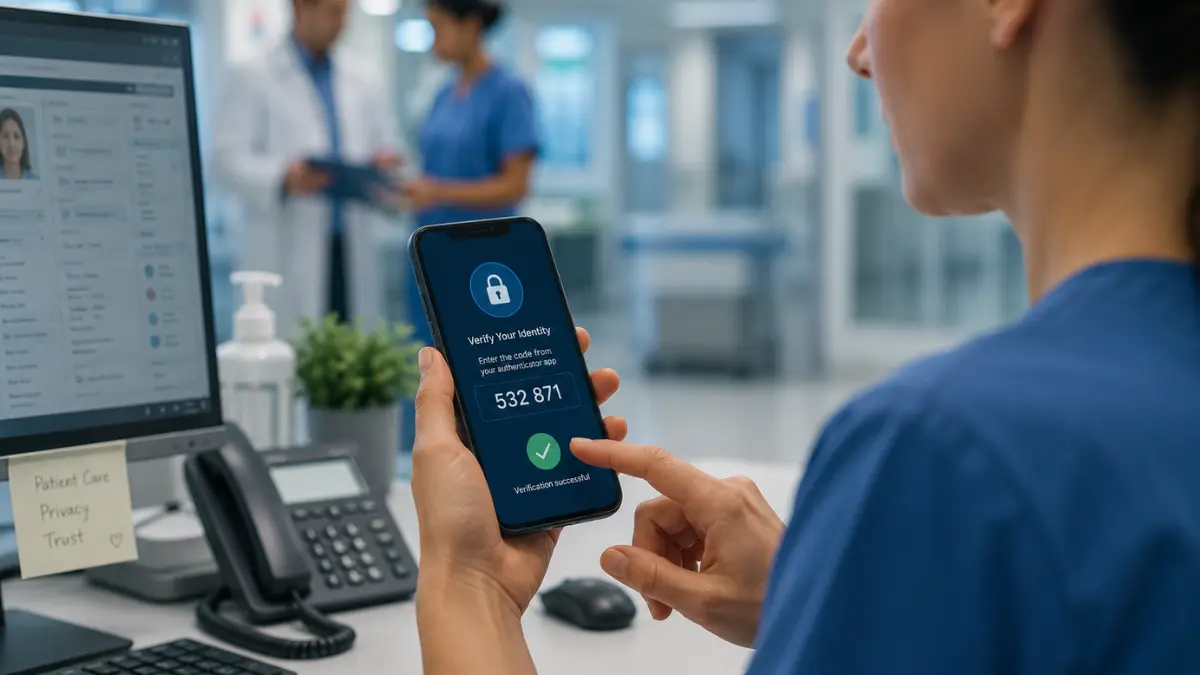
For healthcare leaders, multi-factor authentication, or MFA, is more than an IT decision. It is a business decision that directly affects patient trust, operational resilience, regulatory risk, and the organization’s reputation.
Healthcare organizations rely on digital systems for patient records, billing, scheduling, communication, and clinical workflows. When access to those systems is compromised, the impact can extend far beyond a single account. A breach can expose electronic protected health information (ePHI), interrupt patient care, create costly recovery work, and damage the trust an organization has worked hard to build.
Passwords Alone Are No Longer Enough
Passwords remain one of the most common entry points for attackers. They can be stolen through phishing emails, exposed in data breaches, reused across multiple accounts, or purchased on the dark web.
Even a strong password cannot provide complete protection if it falls into the wrong hands.
MFA adds another layer of verification before access is granted. In addition to entering a password, the user must confirm their identity through another method, such as an authentication application, security key, or unique code.
That additional step makes it much more difficult for an attacker to enter a system using stolen credentials alone.
Why MFA Matters in Healthcare
Healthcare organizations and their business associates manage highly sensitive information across a wide range of systems, users, and locations. Employees may access ePHI from clinical workstations, laptops, mobile devices, cloud platforms, or remote environments.
A single compromised account could provide an attacker with access to patient data, email, shared files, administrative systems, or connected applications. Privileged accounts, remote access tools, and systems containing ePHI should be especially important priorities when implementing MFA.
HIPAA Expectations Are Changing
MFA is also becoming a more urgent HIPAA consideration.
Under the current HIPAA Security Rule, some access-control safeguards are considered addressable, allowing organizations to evaluate how they apply based on their circumstances. The proposed HIPAA Security Rule updates would establish stronger and more consistent expectations for MFA.
Although the proposed rule has not been finalized and its requirements may change, the direction is clear: healthcare organizations should prepare for stronger access controls.
A Practical Step You Can Take Now
Implementing MFA now can reduce the likelihood of unauthorized access while supporting several broader organizational goals. It can strengthen cyber insurance readiness, support Security Risk Assessment findings, protect remote and privileged accounts, and demonstrate due diligence to patients, partners, and regulators.
There may be brief adjustments as employees become familiar with a new login process, but that inconvenience is small compared with the disruption that can follow a compromised account.
The question is no longer whether MFA adds another step. The real question is whether your organization can afford to rely on passwords alone.
MFA is one of the most practical and effective steps healthcare leaders can take today to reduce risk, protect ePHI, and prepare for where HIPAA expectations are heading.

Leave a Reply