
• Blog
  • Services
    • PHIshMD Ongoing Training
    • HIPAA Compliance
    • Discover Vulnerabilities to Patient PHI
  • Store
    • HIPAA Secure Now Service Store
  • Contact Us
    • Sales Inquiry
    • Customer Support
  • Resources
    • Free Healthcare Security Check Up Quiz
    • HIPAA Compliance Requirements | A Guide
    • Webinars & Downloadable Content
    • Use our free Breach Cost Calculator
    • HIPAA Secured Seal
    • In-Email Training & Analysis | Catch Phish

Call us at: 877-275-4545

Client or Partner? Login here
HIPAA Secure Now!HIPAA Secure Now!
  • Blog
  • Services
    • PHIshMD Ongoing Training
    • HIPAA Compliance
    • Discover Vulnerabilities to Patient PHI
  • Store
    • HIPAA Secure Now Service Store
  • Contact Us
    • Sales Inquiry
    • Customer Support
  • Resources
    • Free Healthcare Security Check Up Quiz
    • HIPAA Compliance Requirements | A Guide
    • Webinars & Downloadable Content
    • Use our free Breach Cost Calculator
    • HIPAA Secured Seal
    • In-Email Training & Analysis | Catch Phish

Tabletop Exercises for Effective Incident Response in Healthcare

May 31, 2024 Posted by Art Gross Healthcare Industry, HIPAA, Security No Comments

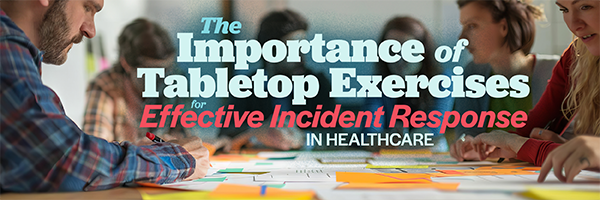
The Importance of Tabletop Exercises for Effective Incident Response Planning in Healthcare HIPAA Compliance Requirements
As a healthcare organization, being prepared for potential security incidents or data breaches is crucial. One of the most effective ways to test and refine your incident response plan is through tabletop exercises. These interactive simulations allow your team to walk through hypothetical emergency scenarios in a controlled, low-stress environment, identifying gaps and improving coordination before a real crisis occurs.

What are Tabletop Exercises?

Tabletop exercises are discussion-based sessions where key stakeholders come together to discuss their roles, responsibilities, and potential actions in response to a simulated incident. Unlike full-scale drills, these exercises don’t involve deploying actual resources or personnel. Instead, they focus on communication, decision-making, and problem-solving within a structured scenario.

Benefits of Tabletop Exercises for Healthcare Organizations

Conducting regular tabletop exercises can provide numerous benefits to healthcare organizations, including:

Validating Incident Response Procedures

By simulating various scenarios, you can assess the effectiveness of your current protocols and make necessary adjustments before a real incident occurs.

Improving Coordination and Communication

Tabletop exercises bring together stakeholders from different departments, promoting cross-functional collaboration and ensuring everyone understands their role in the incident response process.

Identifying Resource Gaps

These exercises can reveal deficiencies in staffing, equipment, or other resources required for an effective response, allowing you to address these gaps proactively.

Enhancing Preparedness

Regular tabletop exercises help maintain a state of readiness, ensuring that teams remain familiar with incident response procedures and can respond swiftly when needed.

Fostering a Culture of Preparedness

By involving all relevant stakeholders, including leadership, IT, security, privacy officers, and clinical staff, tabletop exercises cultivate a culture of preparedness and resilience within your organization.

Designing Effective Tabletop Exercises

To maximize the value of tabletop exercises, healthcare organizations should follow these best practices:

Tailor Scenarios to Specific Risks

Develop scenarios that reflect your organization’s unique vulnerabilities, such as data breaches, natural disasters, or cyber-attacks.

Involve All Relevant Stakeholders

Ensure participation from representatives across departments, including leadership, IT, security, privacy officers, and clinical staff.

Encourage Open Communication

Create an environment where participants feel comfortable sharing their perspectives and asking questions without fear of judgment.

Document Findings and Action Items

Capture insights, lessons learned, and action items during the exercise to inform future improvements to your incident response plan.

Follow Up and Implement Changes

Review the exercise findings and take steps to address any identified gaps or weaknesses in your incident response procedures.

By incorporating tabletop exercises into your overall incident response planning, you can cultivate a culture of preparedness, safeguarding patient data and maintaining resilience in the face of potential threats. Regular practice and continuous improvement are key to ensuring your healthcare organization is ready to respond effectively when an incident occurs.

No Comments
Share
0

You also might be interested in

Introducing HIPAA Secure Now!

Feb 13, 2011

We are proud to announce the launch of the HIPAA[...]

Why perform a Risk Assessment?

Feb 15, 2011

A Risk Assessment is required in order to comply with[...]

Free HIPAA Security Tips and Reminders

Feb 20, 2011

One of the administrative requirements of the HIPAA Security Rule[...]

Leave a Reply Cancel Reply

Recent Posts

  • What Is Acceptable Use in a Medical Office?
  • Most Healthcare Leaders See the Promise of GenAI—Only 36% Feel Ready
  • How to Use Microsoft 365 Securely in a Shared Office Environment
  • Why Your HIPAA Policies Shouldn’t Live in a Drawer
  • Is Your Staff Prompting AI Safely? What You Need to Know Now

Recent Comments

  • Why Your Practice Needs an AI Acceptable Use Policy - HIPAA Secure Now! on How Gen AI is Transforming Everyday Healthcare
  • HIPAA Security Rule Changes 2025: What Your Healthcare Practice Must Know Now - The HJN Blog on 2025 HIPAA Security Rule Updates
  • Too Small for an OCR Audit? 2025 Proves Otherwise - HIPAA Secure Now! on How Engaging Training Reduces Employee Errors in Healthcare
  • 2025 HIPAA Security Rule Updates - HIPAA Secure Now! on How Engaging Training Reduces Employee Errors in Healthcare
  • Overcoming HIPAA Compliance Challenges for Small Healthcare Practices - HIPAA Secure Now! on How Engaging Training Reduces Employee Errors in Healthcare

Archives

  • July 2025
  • June 2025
  • May 2025
  • April 2025
  • March 2025
  • February 2025
  • January 2025
  • December 2024
  • November 2024
  • October 2024
  • September 2024
  • August 2024
  • July 2024
  • June 2024
  • May 2024
  • April 2024
  • March 2024
  • February 2024
  • January 2024
  • December 2023
  • November 2023
  • October 2023
  • September 2023
  • August 2023
  • July 2023
  • June 2023
  • May 2023
  • April 2023
  • March 2023
  • February 2023
  • January 2023
  • December 2022
  • November 2022
  • October 2022
  • September 2022
  • August 2022
  • July 2022
  • June 2022
  • May 2022
  • April 2022
  • March 2022
  • February 2022
  • January 2022
  • December 2021
  • November 2021
  • October 2021
  • September 2021
  • August 2021
  • July 2021
  • June 2021
  • May 2021
  • April 2021
  • March 2021
  • February 2021
  • January 2021
  • December 2020
  • November 2020
  • October 2020
  • September 2020
  • August 2020
  • July 2020
  • June 2020
  • May 2020
  • April 2020
  • March 2020
  • February 2020
  • January 2020
  • December 2019
  • November 2019
  • October 2019
  • September 2019
  • August 2019
  • July 2019
  • June 2019
  • May 2019
  • April 2019
  • March 2019
  • February 2019
  • January 2019
  • November 2018
  • October 2018
  • September 2018
  • August 2018
  • July 2018
  • June 2018
  • May 2018
  • April 2018
  • March 2018
  • February 2018
  • January 2018
  • December 2017
  • November 2017
  • October 2017
  • September 2017
  • August 2017
  • July 2017
  • June 2017
  • May 2017
  • April 2017
  • March 2017
  • February 2017
  • January 2017
  • December 2016
  • November 2016
  • October 2016
  • September 2016
  • August 2016
  • July 2016
  • June 2016
  • May 2016
  • April 2016
  • March 2016
  • February 2016
  • January 2016
  • December 2015
  • November 2015
  • October 2015
  • September 2015
  • August 2015
  • June 2015
  • May 2015
  • April 2015
  • March 2015
  • February 2015
  • January 2015
  • December 2014
  • November 2014
  • October 2014
  • September 2014
  • August 2014
  • July 2014
  • June 2014
  • May 2014
  • April 2014
  • March 2014
  • February 2014
  • January 2014
  • December 2013
  • November 2013
  • October 2013
  • September 2013
  • August 2013
  • July 2013
  • June 2013
  • May 2013
  • April 2013
  • March 2013
  • February 2013
  • January 2013
  • December 2012
  • November 2012
  • October 2012
  • September 2012
  • July 2012
  • June 2012
  • May 2012
  • April 2012
  • March 2012
  • February 2012
  • January 2012
  • December 2011
  • November 2011
  • October 2011
  • September 2011
  • August 2011
  • July 2011
  • June 2011
  • May 2011
  • April 2011
  • March 2011
  • February 2011

Categories

  • Backup & Disaster Recovery
  • Business Associates
  • Client News
  • Download
  • Healthcare Industry
  • HIPAA
  • HIPAA Audits
  • HIPAA Violations
  • HSN News
  • Legal
  • MACRA
  • Policies and Procedures
  • Press Release
  • Remote Workforce
  • Risk Assessment
  • Scams
  • Security
  • Security Reminders
  • Security Training
  • Telehealth
  • Uncategorized
  • Webinar
  • Website

Meta

  • Log in
  • Entries feed
  • Comments feed
  • WordPress.org

Contact Us

  • HIPAA Secure Now
  • 55 Madison Ave, Suite 400 Morristown, NJ 07960
  • (877) 275 - 4545
  • info@hipaasecurenow.com

Find us on Social Media

LEGAL

Privacy Policy

Terms of Service

Subscribe to our Newsletter

  • Hidden

© 2026 · HIPAA Secure Now!

Prev Next