
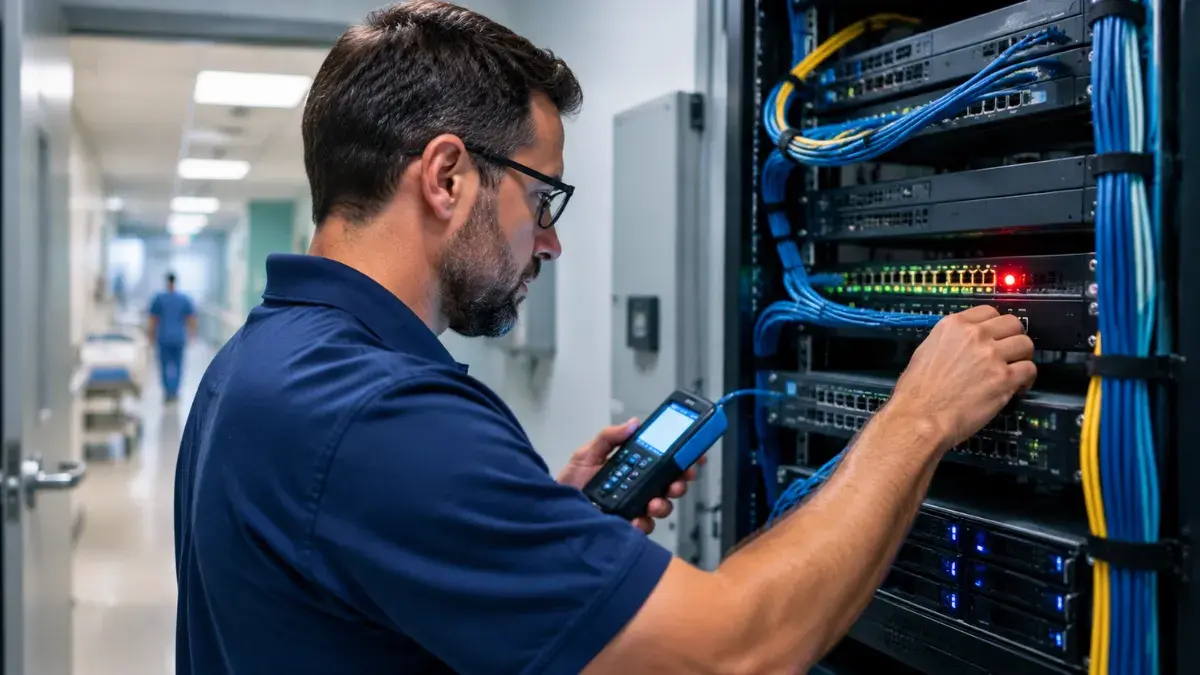
A recent cybersecurity threat is a reminder that older or overlooked technology can put patient information and daily operations at risk.
In October 2026, two serious PHP software vulnerabilities, collectively called PHP2Shell, prompted cybersecurity warnings. PHP (PHP Hypertext Processor) is used behind the scenes in some websites and applications. It is a programming language that helps websites and online applications work behind the scenes. For example, when you submit an appointment request through a website built with PHP, it can process the information you entered and send back a confirmation. Attackers could run malicious code on affected systems without logging in. The original article reports that CISA urged organizations to identify and update vulnerable systems.
The vulnerabilities, identified as CVE-2026-109618 and CVE-2026-109619, were disclosed on October 21, 2026. The Cybersecurity and Infrastructure Security Agency (CISA) subsequently added both to its Known Exploited Vulnerabilities catalog on October 26, confirming that attackers were actively exploiting these weaknesses.
CISA has urged organizations to identify affected PHP installations and apply security updates immediately, prioritizing systems accessible from the internet.
Your practice may use PHP without knowing it. It could be part of a website, patient portal, scheduling tool, billing application, or older administrative system. Not all these systems use PHP or are affected; your IT provider or vendor must determine actual exposure.
Why This Matters for Healthcare
A vulnerable application does not have to be your electronic health record (EHR) to cause trouble. An attack on a connected or administrative system could interrupt scheduling, billing, insurance verification, or patient communication. If electronic protected health information (ePHI) is involved, unauthorized access could also create privacy and security concerns.
The HIPAA Connection
The HIPAA Security Rule requires organizations to assess risks and vulnerabilities to ePHI and implement appropriate safeguards. This includes considering older applications, vendor-managed tools, and other systems that store, transmit, or provide access to ePHI—not just the main EHR.
A vulnerability scan can identify some technical weaknesses, but it does not replace a comprehensive HIPAA Security Risk Analysis. Identified risks also need to be addressed and documented.
Five Practical Steps for Your Practice
- Ask IT what systems you use. Have your IT provider review websites, servers, portals, older applications, and other tools for potentially affected PHP components.
- Confirm updates and vendor guidance. Ask whether any systems are affected and whether security patches or other protective steps have been completed. Prioritize internet-facing systems.
- Check for signs of compromise. Patching does not undo an earlier attack. Have qualified personnel investigate suspicious activity and follow your incident response process when appropriate.
- Review your Security Risk Analysis. Make sure older systems, third-party applications, and changes to how ePHI is handled are considered. Document risks and corrective actions.
- Remind employees to report concerns. Staff should promptly report unusual system behavior or access requests and obtain approval before using new applications.
The Bottom Line
The biggest lesson from PHP2Shell is not that every healthcare practice has this vulnerability. It is that organizations need to know what technology they rely on, and who is responsible for keeping it secure. Regular IT reviews, timely updates, a thorough Security Risk Analysis, and employee awareness all help protect patient information and keep care running.
HIPAA Secure Now helps healthcare organizations strengthen compliance through Security Risk Analysis, employee training, and cybersecurity education.
Leave a Reply