
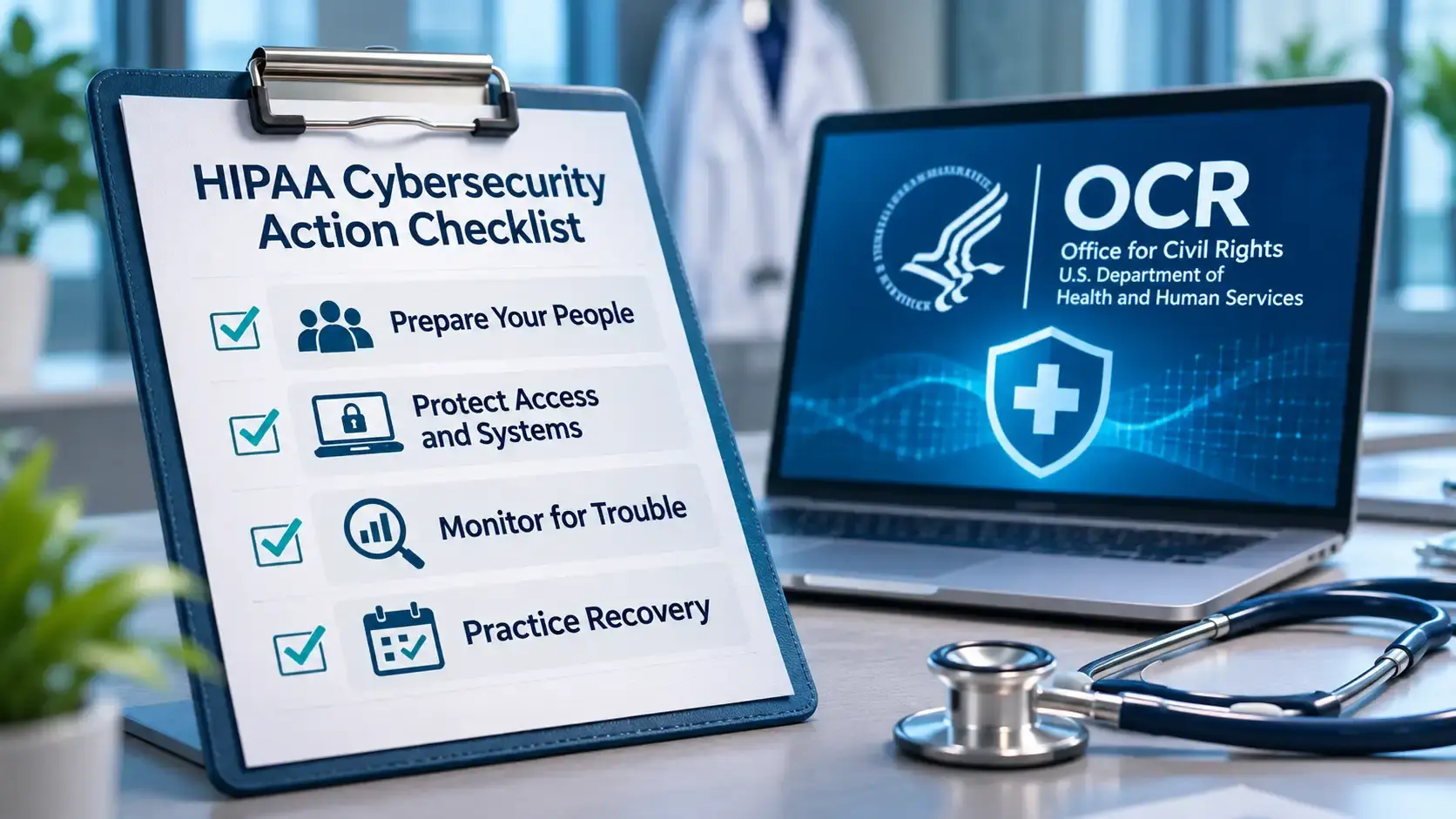
Cybersecurity deserves attention year-round. In its October 2026 newsletter, the Health and Human Services Office for Civil Rights (OCR) connects practical cybersecurity steps to existing HIPAA obligations for healthcare organizations and their business associates, including IT providers handling electronic protected health information.
What Should Your Organization Focus On?
- Prepare Your People – Train employees, including management, to recognize and report suspicious activity. Phishing simulations can reinforce that training.
- Protect Access and Systems – Review passwords, multifactor authentication (MFA), encryption, and software updates against the risks identified in your security risk assessment.
- Monitor for Trouble – Regularly review system activity and logs to help identify suspicious behavior.
- Practice Recovery – Test backup restoration and rehearse incident response with leadership, IT, legal counsel, and other relevant stakeholders. The newsletter recommends incident response exercises at least annually.
OCR is Backing its Guidance with Enforcement.
The newsletter reinforces the importance of putting HIPAA safeguards into practice. On October 29, OCR announced an $800,000 ransomware settlement with Lehigh Valley Health Network and three years of corrective oversight. Findings included potential failures to conduct a thorough risk analysis and regularly review system activity. This marked OCR’s 22nd ransomware enforcement action, just one example of its broader enforcement efforts. Organizations should take these reminders seriously across their entire HIPAA compliance program.
What’s Ahead?
The newsletter does not create new HIPAA requirements. Separately, proposed Security Rule changes would strengthen cybersecurity requirements. The federal agenda lists July 2027 for final action, but that is a planning target, not a guaranteed date or compliance deadline. Current requirements remain in effect.
Be sure to complete your annual security risk assessment by December 31, 2026. Then use the findings to guide your risk management program: work with your compliance and IT teams to prioritize identified risks, assign responsibility for corrective actions, and track progress toward addressing them.



Leave a Reply